
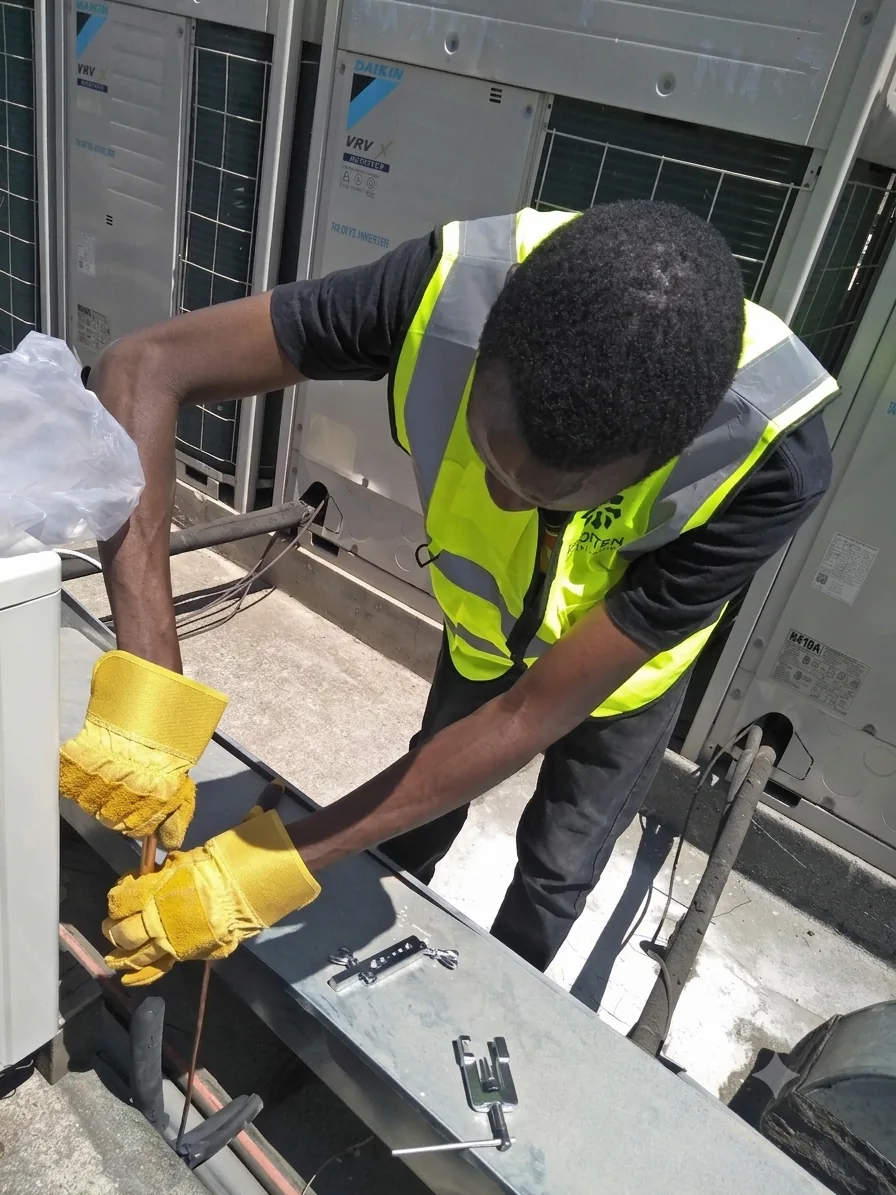
Zoned cooling for buildings where every tenant wants separate control.
A shared rooftop and a single landlord don't mean tenants should share a thermostat. Here's how we design VRV systems that give each unit independent control without turning the rooftop into a maze of ductwork.
Multi-tenant buildings put competing demands on one rooftop
Each tenant wants control over their own space, but the building only has so much rooftop area, structural load capacity, and riser space to work with. A single central plant forces trade-offs no tenant is happy with, while poorly zoned VRV can mean one tenant's setpoint change affecting a neighbouring unit. Landlords also need a system that's straightforward to sub-meter and bill accurately.
How we design a rooftop VRV system
The same engineering-first process we use across every project, applied to shared-building constraints.
We calculate heat load per tenant zone individually, not as one averaged building load, so each zone gets equipment sized to what it actually needs.
Branch controllers give each tenant their own thermostat and schedule while outdoor units, refrigerant piping and risers stay shared and space-efficient, wired into our VRF systems range.
We plan outdoor unit placement, pipe runs and service access against the building's actual rooftop footprint and load limits before installation starts, not after.
Work is sequenced floor by floor and zone by zone so occupied units keep running while unoccupied or new zones are commissioned.
Built to stay reliable, not just to pass commissioning
High-traffic, continuously-running equipment like this sits on our Comprehensive tier — monthly visits, priority call-out status and guaranteed next-day response. See our maintenance plans.
If a process cooling unit does fail outside a scheduled visit, our rapid response team is dispatched immediately, day or night.
No subcontractors. The technicians who commissioned your system are the same ones who service it.









Start with a site survey.
Our engineers will assess your premises, load requirements, and constraints to recommend the exact system needed.
Request a Quote