Chillers
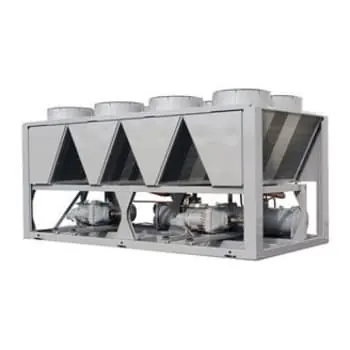
Chillers produce chilled water that is circulated to air handling units, fan coils or process equipment throughout a building or plant, making them the backbone of large-scale cooling where a single central plant is more practical than many separate refrigerant systems. Frosten supplies and installs air-cooled and water-cooled chillers for large commercial buildings, data centres, hospitals and industrial process cooling.
Key Features
Air-Cooled & Water-Cooled Options
Air-cooled for simpler installation, water-cooled for higher efficiency at larger capacities.
Scroll, Screw & Centrifugal Compressors
Compressor type matched to capacity and load profile.
Variable Speed Drives
Part-load efficiency gains on modern chiller platforms.
Redundant Circuit Design
Dual-circuit configurations maintain partial cooling if one circuit needs service.
BMS Integration
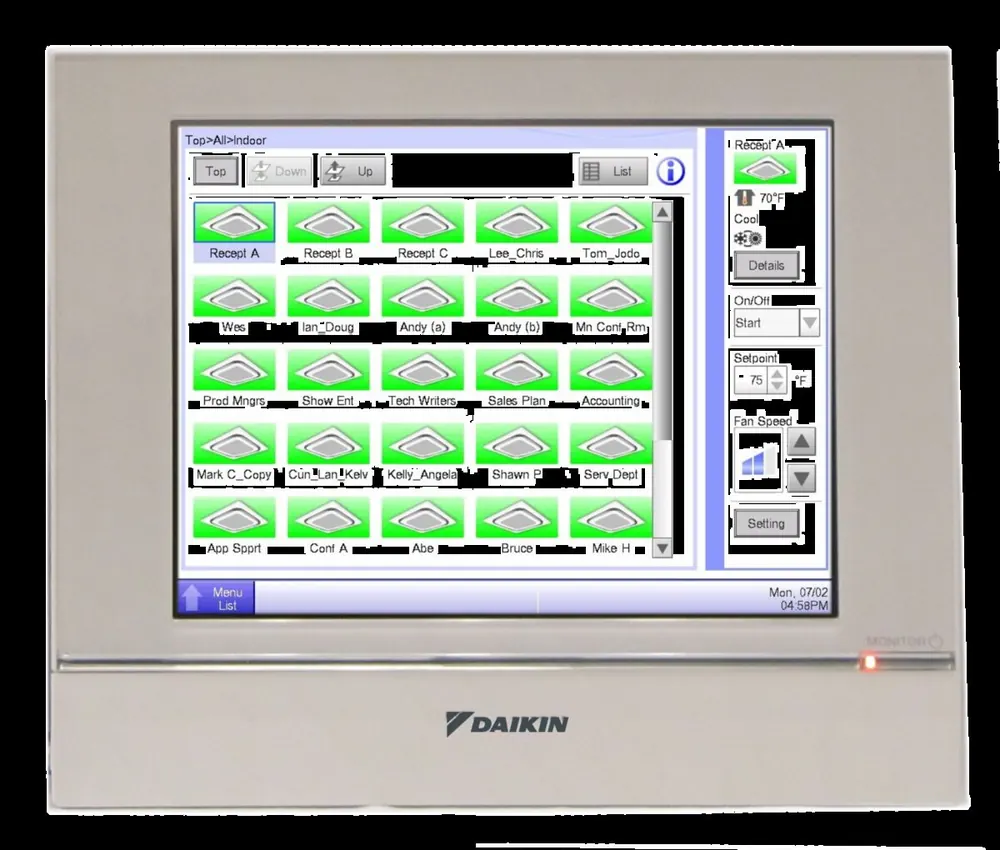
BACnet/Modbus connectivity for centralised monitoring and control.
Benefits
Typical Applications
Available Capacities
Optional Accessories
Brands We Supply




Installation Options
Preventive Maintenance
Warranty
Manufacturer warranty of 1–5 years on parts and compressor depending on brand and capacity; Frosten warranty covers plant installation, piping and commissioning workmanship.
Industries Served
Why Choose Frosten
Professional Installation
100% in-house delivery, no subcontractors, from design through commissioning.
Preventive Maintenance
Documented maintenance plans sized to your equipment and site.
Genuine Spare Parts
Parts sourced through authorised brand channels, not grey-market substitutes.
Qualified Technicians
Trained, accountable in-house engineers, the same team from survey to aftercare.
Fast Response
24/7 breakdown response across our service footprint.
Warranty Support
Manufacturer warranty backed by Frosten's own workmanship guarantee.
Frequently Asked Questions
Should I choose air-cooled or water-cooled?
Air-cooled chillers are simpler to install and need no cooling tower, suiting most commercial buildings up to a few hundred tonnes. Water-cooled chillers are more efficient at larger capacities but need a cooling tower, condenser water treatment and more plant room space; we assess this trade-off during design.
Do chillers need a dedicated plant room?
Water-cooled systems generally need a plant room for the chiller and pumps, with the cooling tower outside. Air-cooled chillers can often sit on a rooftop or ground-level pad without an enclosed plant room.
How is chiller capacity sized?
Sizing is based on a full building cooling load calculation — floor area alone is not sufficient at this scale — accounting for glazing, occupancy, equipment heat gain and climate data.